


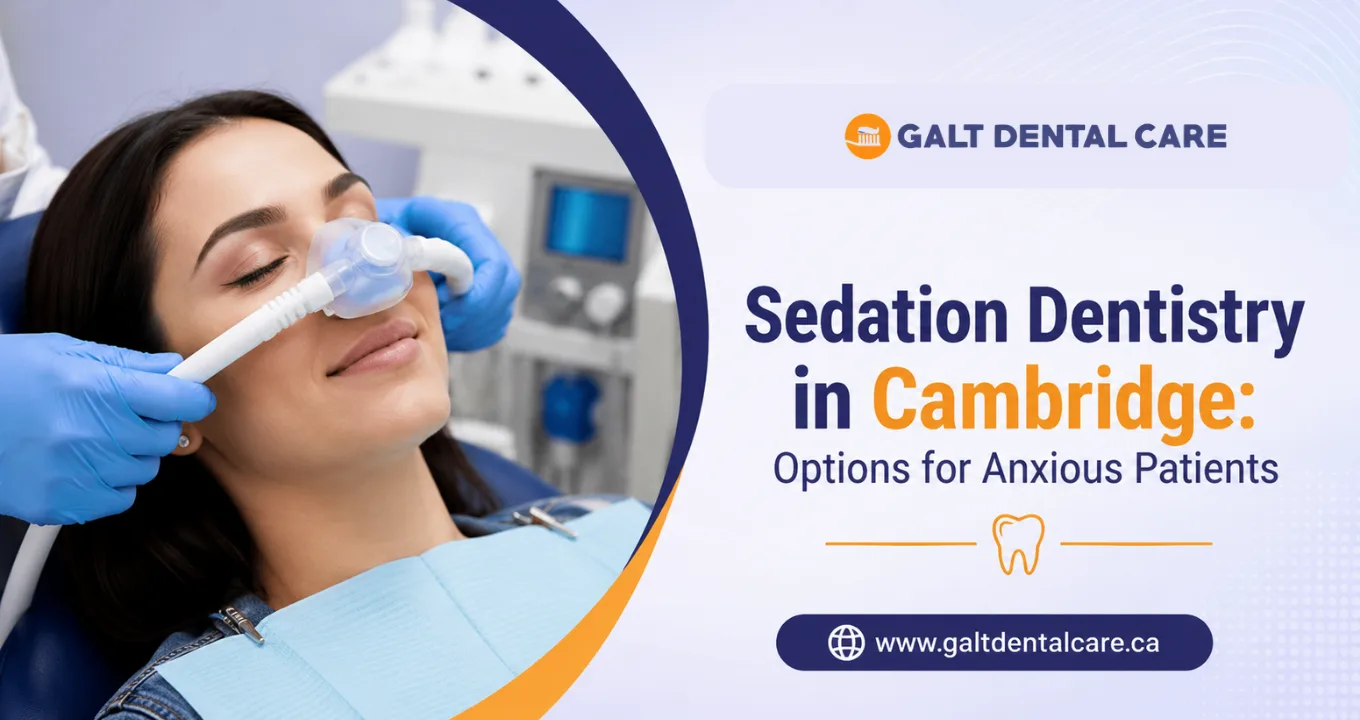
Sedation Dentistry in Cambridge
If the sound of a dental drill makes your palms sweat, you’re not alone. Dental anxiety is one of the most common reasons people put off the care they need — sometimes for years. As a dentist practising in Cambridge, Ontario, I see this fear walk through my door every week, and I want you to know something important: you don’t have to white-knuckle your way through an appointment anymore.
Sedation dentistry in Cambridge has come a long way. Whether you need a simple cleaning or a more involved procedure like a root canal or wisdom tooth removal, there’s a sedation option that can help you stay calm, comfortable, and in control. In this guide, I’ll walk you through exactly how dental sedation works, which option might suit you, and what a sedation appointment actually looks like from start to finish.
Key Takeaways
Sedation Dentistry in Cambridge at a Glance
-
Sedation dentistry uses mild medication to help you relax during treatment — it does not necessarily put you to sleep.
-
Common options include nitrous oxide, oral sedation, and IV sedation, each suited to different anxiety levels and procedures.
-
Sedation is regulated and considered safe when administered by trained dental professionals following ADA and CDA guidelines.
-
Galt Dental Care offers sedation dentistry in Cambridge for anxious patients, children, and those undergoing longer procedures.
Curious whether sedation is right for your next visit? Explore our Sedation Dentistry services in Cambridge.
What Is Sedation Dentistry?
Sedation dentistry uses medication to help you relax during a dental procedure. Depending on the type used, you may stay fully awake and aware, feel pleasantly drowsy, or drift into a light sleep-like state. Most patients still respond to voice and touch throughout treatment, which is why dentists often call this “conscious sedation.”
A common misconception is that sedation means you’ll be unconscious. In reality, most sedation dentistry keeps you conscious but deeply relaxed. General anesthesia, which does cause full unconsciousness, is a separate and far less common option, usually reserved for complex oral surgery.
Who Needs Sedation Dentistry in Cambridge?
Sedation isn’t just for people with severe dental phobia. I recommend it for a range of patients, and research backs up what I see in practice. A national survey of Canadian adults found that people with high dental fear were far more likely to avoid appointments altogether, and nearly half had cancelled or skipped a visit specifically because of anxiety. If that sounds familiar, sedation dentistry might be the missing piece that gets you back into a regular care routine.
Who Should Consider Sedation
-
Patients who feel nervous, tense, or panicky at the thought of a dental visit
-
Anyone with a strong gag reflex that makes routine work difficult
-
Patients who need extensive treatment completed in fewer visits
-
Those with sensitive teeth or a low pain threshold
-
Patients who struggle to sit still for long periods, including some children and patients with special needs
-
Anyone who had a painful or frightening dental experience in the past
Types of Dental Sedation Options at Galt Dental Care
Not every patient needs the same level of sedation. I choose the right option based on your anxiety level, medical history, and the procedure planned. Here are the three types I use most often at Galt Dental Care.
Nitrous Oxide (Laughing Gas)
Nitrous oxide dentist visits are the gentlest sedation option available. You breathe a mix of nitrous oxide and oxygen through a small nose mask, and within minutes you’ll feel calm and a little lighter. The effects wear off almost as soon as the mask comes off, so you can drive yourself home afterward.
This option works well for mild to moderate anxiety, quick procedures, and younger patients.
Oral Sedation Dentistry
Oral sedation dentistry involves taking a prescribed sedative pill, usually about an hour before your appointment. You’ll stay awake, but you’ll likely feel drowsy and deeply relaxed, and many patients remember very little about the procedure afterward. Because the medication affects coordination and memory for several hours, you’ll need someone to drive you home.
I typically recommend oral sedation for moderate anxiety or for procedures that take longer than a routine cleaning.
IV Sedation Dental Treatment
IV sedation dental treatment delivers medication directly into your bloodstream through a small intravenous line. It works faster than a pill and lets me adjust your sedation level throughout the appointment. Most patients describe the experience as a comfortable, dreamlike state, with little to no memory of the procedure once it’s done.
This option suits patients with significant dental anxiety, complex or lengthy procedures such as multiple extractions, or dental implant placement.
| Sedation Type | Awareness Level | Onset / Recovery | Best For |
|---|---|---|---|
| Nitrous Oxide | Fully aware, relaxed | Minutes / immediate | Mild anxiety, short visits |
| Oral Sedation | Drowsy, limited memory | ~1 hour / several hours | Moderate anxiety, longer visits |
| IV Sedation | Deeply relaxed, little memory | Minutes / same-day | Significant anxiety, complex procedures |
Is Sedation Dentistry Safe?
Yes, sedation dentistry is considered safe when it’s provided by a trained dentist who follows established clinical guidelines. The American Dental Association (ADA) maintains formal guidelines for the use of sedation and general anesthesia by dentists, covering training standards, patient monitoring, and safety protocols. The Canadian Dental Association (CDA) echoes this approach, and Health Canada regulates the medications used.
Before recommending any sedation option, I review your full medical history, current medications, and any existing health conditions. Patients are monitored throughout the procedure, and you’ll always be given clear pre- and post-appointment instructions.
What to Expect During a Sedation Dentistry Appointment
Here’s how a typical sedation visit unfolds at our Cambridge office:
Your Sedation Appointment Steps
-
Consultation: We discuss your anxiety level, medical history, and the procedure ahead so I can recommend the right sedation type.
-
Preparation: Depending on the sedation chosen, you may need to arrange a ride home or avoid eating beforehand.
-
Sedation: The sedative is administered, and I monitor your comfort throughout the procedure.
-
Recovery: With nitrous oxide, you’ll be ready to go almost immediately. With oral or IV sedation, you’ll rest briefly before heading home with your driver.
-
Follow-up: I’ll give you simple aftercare instructions specific to your treatment and sedation type.
Sedation Dentistry for Specific Situations
Sedation isn’t one-size-fits-all. A few situations come up often in my Cambridge practice:
Complex or surgical procedures. Patients undergoing wisdom teeth removal or dental implant placement often benefit from oral or IV sedation, since these procedures take longer and involve more sensation than a routine filling.
Children and nervous young patients. Nitrous oxide is frequently used for kids who feel anxious in the chair. It’s mild, quick to wear off, and gives them a more positive first impression of dental visits.
Dental emergencies. If you’re dealing with sudden pain, swelling, or trauma, sedation can make emergency treatment far more bearable while we address the urgent issue.
How Much Does Sedation Dentistry Cost in Cambridge?
Sedation costs vary depending on the type used and the length of your procedure. Nitrous oxide is generally the most affordable option, while oral and IV sedation cost more due to the medication and monitoring involved. Many insurance plans cover sedation when it’s medically necessary, and at Galt Dental Care, we handle direct billing to most providers, including the Canadian Dental Care Plan, so you’re not left guessing about costs.
Wondering how your treatment will be billed? Read more about our Direct Billing process in Cambridge.
Choosing a Sedation Dentist Near You in Cambridge
When you’re searching for a “sedation dentist near me,” look for a practice that takes time to understand your anxiety, explains every option clearly, and follows recognized safety guidelines. That’s the approach I take with every patient who sits in my chair. Sleep dentistry and sedation options exist so that fear never has to stand between you and a healthy smile, and I’d rather you leave your appointment relieved than dreading the next one.
Nervous About Your Next Dental Visit?
Book a consultation with our Cambridge, Ontario team and we’ll walk you through your sedation dentistry options so you can find the comfort level that’s right for you.
Frequently Asked Questions
Does sedation dentistry put you to sleep?
Not usually. Most sedation dentistry, including nitrous oxide and oral sedation, keeps you conscious but deeply relaxed. Full unconsciousness only happens under general anesthesia, which is a separate and less common option.
Is sedation dentistry safe for kids?
Yes. Nitrous oxide is widely used with children because it’s mild, wears off quickly, and helps make dental visits less stressful for young patients.
Can I drive myself home after sedation dentistry?
It depends on the type. You can drive yourself home after nitrous oxide since it wears off almost immediately. With oral or IV sedation, you’ll need someone to drive you, as the effects can linger for several hours.
How long does dental sedation last?
Nitrous oxide effects clear within minutes of removing the mask. Oral sedation can leave you groggy for several hours. IV sedation wears off relatively quickly, but grogginess can persist for the rest of the day.
Does insurance cover sedation dentistry?
Many insurance plans cover sedation when it’s medically necessary for your treatment. We offer direct billing to most providers so you can confirm your coverage before your appointment.
What’s the difference between oral sedation and IV sedation?
Oral sedation is taken as a pill before your appointment and takes about an hour to take effect. IV sedation is administered through a vein, works faster, and allows the dentist to adjust your sedation level throughout the procedure.
Related Services at Galt Dental Care
These treatments and resources are available across the Galt Dental Care website, whether you’re planning a sedation appointment or exploring other options:
Comfort & Sedation Services
- Our Sedation Options — Full details on our nitrous oxide, oral, and IV sedation options.
- Dental Emergencies — Comfort options for patients experiencing sudden pain, swelling, or trauma.
Procedures Often Paired with Sedation
- Wisdom Teeth Extraction — A common procedure where oral or IV sedation helps patients stay comfortable.
- Dental Implants — Longer surgical appointments where sedation supports a relaxed experience.
Getting Started
- Family Dentistry in Cambridge — Dental care for every member of your household.
- All Dental Services at Galt Dental Care — Explore our complete range of dental care services available in Cambridge, Ontario.
Trusted Clinical References
- American Dental Association (ADA) — Anesthesia and Sedation: Evidence-based guidelines for the use of sedation and general anesthesia by dentists.
- Canadian Dental Association (CDA) — Oral Health Procedures: Authoritative patient guidance on dental procedures across Canada.
- Health Canada: National regulatory oversight for the medications and materials used in dental sedation.
How This Article Was Created
To maintain the absolute highest level of clinical accuracy and digital web trust, my team and I built this comprehensive guide using strict, verifiable parameters.
Clinical Dental Guidelines: We based the medical and clinical information in this article squarely on the established standards set forth by the American Dental Association (ADA), the Canadian Dental Association (CDA), and Health Canada’s regulatory framework for sedative medications used in dentistry.